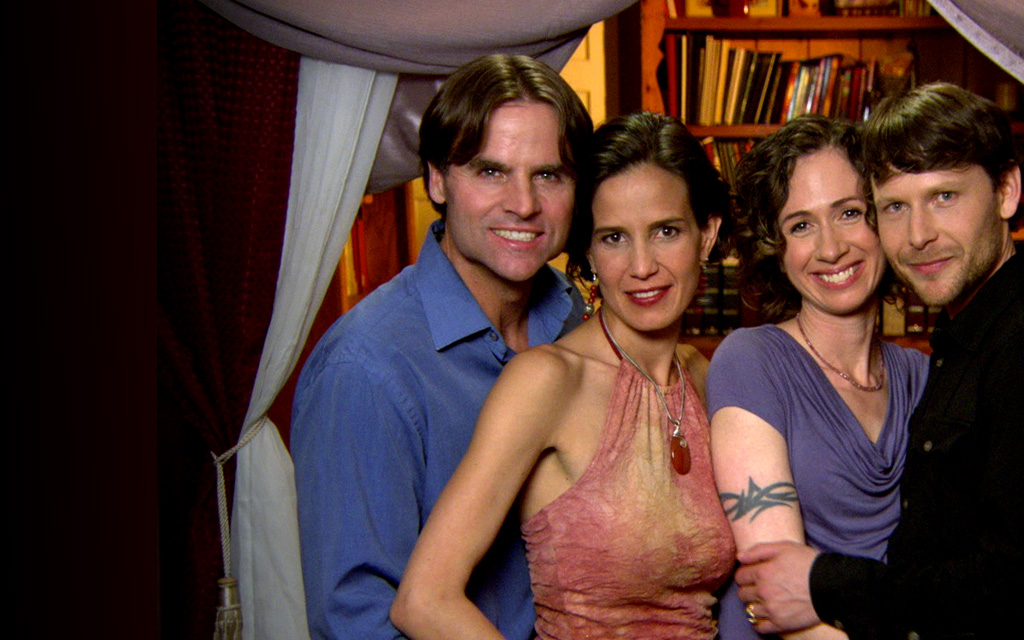
Showing posts with label polyamory. Show all posts

Is Your Relationship Really Ready for Polyamory?

So we just jumped straight into polyswinging and then polyamory. It's going to keep popping up, of course. Why? We're all about exploring ways to make your relationship better. Polyamory might be it? You never know. O.M. Grey, a knowledgeable polyamory writer and prolific blogger, talks about the characteristics of a polyamorists. Is your relationship ready for polyamory? O.M. Grey explains more. Read on!

* * *

I’ve learned so  much in the past two years. And I’m going to share it with you without holding back. Not even a little bit. This is “my truth,” as the new-agey, responsibility-avoiding people like to say.

My husband and I have been polyamorous for about seven years. Although, I suppose the first few were much more about being a non-descript form of an open marriage since we weren’t seeking multiple, committed, loving relationships. The theory behind our lifestyle is what I’ve said again and again: Love breeds love and desire breeds desire. Any encounter we had outside our marriage during those first few years were very open and the intentions on both sides were very, very clear.

When we moved into practicing polyamory (seeking out another committed, loving relationship) I learned not everyone has the same definition of polyamory as us. Well, as those people who are successfully practicing a polyamory lifestyle do.

So let's take apart, "poly" and "amory" to understand better.

What is poly?

Most people who love to call themselves (and hide behind) “poly” are really focused on quantity rather than quality. Alright. I can have more than one girlfriend/lover. So, I’m going to have three! Because, let’s see... I’ve never been able to make a relationship with one woman work long term, so I’m going to try with three! That’s the ticket! That’s the answer! That’s where I’ve been going wrong for the past 15 years!

Most people I’ve met in the Austin poly community are not practicing polyamory. They’re dating. They go from several short-term relationships to several short-term relationships, none lasting more than 3-6 months. Hello! Not polyamory! That’s dating! And not dating very successfully because they keep ending!

Also in the Austin, poly community are several truly polyamorous families. They are what’s known as the “core group.” One of them even call themselves the polypod, and I think that’s rather adorable. The polypod, from what I’ve seen (and I’ve only seen them from a distance), as well as the few other multi-relationship groups who I know a little better and I’d consider friends, are doing it well. And by well, I mean successfully. They are open, honest, respectful, loving and supportive. They commit and invest in their relationships.

They might have casual sex on the side from time to time, but it’s after their current relationships are firmly established and secure. Because, after all, it’s about more love… not more sex. And the few times you need to fulfill that biological need with someone different, then be honest about that. Never lie to get laid. How disgusting.


What about 'amory' or love?

The most successful polyamorous relationships I’ve seen focus much more on the “amorous” part of the word, less on the “poly” part. It’s about love! It’s all about love! Relationships take effort, investment, time and energy to solidify. If you claim to be poly, think about this: If you want to be poly, think about this:

Take. One. Relationship. At. A. Time.

When your first relationship has a solid foundation (and I mean SOLID foundation), the kind that takes at least a year, if not more, to establish, then look for a second one. This is not a race to see who can have the biggest harem. And, by the way, if you’re building a harem. YOU’RE NOT POLY! You’re a misogynist and a predator who sees women as life support systems for their pussies.

How to become polyamorous 

Romantic relationships contain drama (how I’ve come to loathe that word). It’s built in. Everyone has their insecurities and their baggage. Everyone has their idiosyncrasies. It takes time to build a solid foundation and learn how to communicate with each other. Build trust. Establish and maintain intimacy. Minimize and handle inevitable conflicts. Ease through misunderstandings. Manage fears and insecurities on both side. Get to a level of comfort and security in yourselves and each other.

Then, open up to dating others. I’m not talking about casual sex unless that’s specifically what you’re looking for. If it is, be very up front about that. Because polyamory means multiple, loving, committed relationships, or the pursuit thereof. Set clearly defined rules and don’t break them, or that will damage the trust you just spent a year building. Once you meet someone you think you can form a deeper relationship with, close off dating others. Focus on solidifying that second relationship while maintaining the first for another year!

Insecurities will pop up. Jealousies (and yes, they don’t magically disappear when you label yourself polyamorous) and misunderstandings will arise.

Give yourself time to learn about, develop, and nurture this other love. Commit yourself to making it work, for, again (and I repeat myself so much because so many people just don’t get it).
  
Healthy relationships require effort, investment and responsibility!

After the second relationship is solidified and the first is stronger than before, and you still have extra time/needs that aren’t being met, then look for a third relationship. But always remember, finding another significant other isn’t about finding someone better, it’s about increasing the love and the desire among your own little polypod. It’s about ensuring that everyone you love feels loved, not ignored or pushed to the side or replaced.

It’s about more love. Always, more love.

If you don’t have time/energy/capacity to manage, maintain, nurture, and grow one or two relationships, plus your job, plus your kids, plus time for yourself and your friends – why do you want another? It’s a recipe for disaster and heartache on many levels. You don’t date someone for three months and say, “Okay, ‘primary’ – check. We’re ‘solid,’ so who’s next?”

Fuck that. You’re not solid after three months. You’re barely starting. And if you run at the first sign of struggle, then, guess what, you're not a poly! If you find yourself saying “I want to be able to do what I want when I want, without responsibility or accountability,” then you’re not poly. You’re selfish.

The last two years have been difficult, as you all have seen from reading this blog, especially the past few months. Do you really think my marriage could’ve survived (let alone thrived and gotten stronger) if it hadn’t been quite literally unshakable?

And for those of you looking for you 100%-genuinely-happy-all-the-time-easy-no-drama-or-responsibility-perfect love? Grow the fuck up. There is no such thing. When you are a perfect partner, you’ll find your fairy tale perfect love. And let me tell you, mister, you’ve got a long fucking way to go. I guess the anger portion of the grieving has set in. It’s about fucking time.

This was a post by O.M. Grey. The original post can be found on her blog here.

Nestled in the mountains of Northern California, Olivia M. Grey lives in the cobwebbed corners of her mind writing paranormal romance with a Steampunk twist. She dreams of the dark streets of London and the decadent deeds that occur after sunset. As an author of Steamy Steampunk, as well as a poet, blogger, podcaster, and speaker, Olivia focuses both her poetry and prose on alternative relationship lifestyles and deliciously dark matters of the heart and soul.

Her work has been published in various anthologies and magazines like Stories in the Ether, Steampunk Adventures, SNM Horror Magazine and How The West Was Wicked. Her premier Steampunk BDSM erotica novel, Avalon Revisited, is an Amazon.com Gothic Romance bestseller. She loves to host tea parties, and she runs a delightful game of charades, Victorian style. Follow her on Twitter @omgrey and subscribe to her on Facebook.
You have read this article Communication / Education / emotional / for couples / for men / for women / health / marriage / monogamy / O.M. Grey / polyamory / relationships / romance / stronger relationship with the title polyamory. You can bookmark this page URL https://lamentoeternal.blogspot.com/2012/12/is-your-relationship-really-ready-for.html. Thanks!

3 Reasons Cheating Is Not An Option


Infidelity is highly destructive. Trust is very difficult to gain back once you loose it. Whether you want to pretend to be the other woman or discuss polyamory as an alternative to cheating, Drs. Chuck and Jo feel strongly feel that communication is the way to save your marriage. Going behind someone's back and cheating is never the true answer. Websites like Ashley Madison, try to tell us that they aid couples who have problems. We strongly disagree. Here are three reasons why cheating is not an option.

* * *

Love isn’t dead, but every so often we read something that makes us think it might be comatose.

As the Internet dating world has exploded, with more than 40 million Americans having profiles on at least one of the key dating personal Websites, there is another kind of dating site that has popped up that just makes our blood boil.

Now, there are Websites that cater to married people who are seeking to have affairs with others. These sites guarantee anonymity and discretion and they create a feeding ground for people who have no problem with infidelity. What’s worse is that the founder of the most popular site — the Ashley Madison site with 13 million members around the world — is trying to defend the practice of having extramarital affairs as an aid to couples who are having marital problems.

To those of us who make a profession out of helping people solve their relationship issues, it’s like Charlie Sheen telling kids that drugs are good for you. So, if you have a moment, please allow us to dispel some of these inane arguments before they begin to take root and make some people believe that having an affair is just the shot in the arm their marriage needs.

#1 Cheating is not consensual 

Noel Biderman, the former lawyer and sports agent who founded Ashley Madison, has been making the interview rounds to promote his site. In one interview, he stated that non-monogamy has always been a part of traditional marriage, dating back to polygamists from the African tribes to the early Mormons. This is a false comparison, because that style of non-monogamy was consensual. Women who married men with multiple wives in those cultures knew they were marrying a man with multiple wives. They had full disclosure. An affair is an act of deception, which involves a married partner in a non-consensual act. They did not have a choice in their partner having another romantic partner — it happened without their knowledge of permission. So, that argument is a crock of ca-ca.

#2 It won't help keep your marriage or family together

In another interview, he tried to indicate that infidelity is good for marriage, because it’s all about sex. His contention is that someone who wants to have an affair because he or she is dissatisfied with their sex life would be selfish to forego the affair and just get a divorce. His idea is that marriages are often also about raising children and life partnerships, and sex is just one dimension. So, why get a divorce over the sex issue alone? Just have an affair and keep the family together.

There are so many things wrong with that argument, we barely know where to begin. First of all, an affair creates a breach of trust, which many families never survive. And if you don’t think an affair will never be revealed, ask Tiger Woods or Arnold Schwarzenegger how that concept worked out for them. Further, if the sex life is unfulfilling, that creates tension that children will see, making them unhappy, too. Moreover, there is another option other than having an affair or getting a divorce. It’s called working with your partner on increasing the quality of your marital sex life. I understand there are even counselors out there who can help them with that. We know a couple who seem pretty good at that, too.

#3 Cheating is not a wake-up call

The last argument he makes on the benefits of affairs is that they are actually good for a marriage because they can bring couples together. His viewpoint is that the affair acts like a wakeup call for a couple in crisis, and gives them the ability to come together to fix what’s wrong with their marriage.

What’s wrong with that marriage is that the trust has been broken, and repairing that trust now becomes the focal point of the work they have to do, not their sex life. In fact, many marital sex lives have a hard time recovering from an affair because the image of infidelity is very difficult for partners to overcome. It’s not that it can’t be done, but a couple that chooses instead to work honestly on fixing their sex life has far less work to do than a couple who must work on trust issues before sex can ever even happen again.

Our advice to married men and women who are contemplating an affair is to stop, take a breath, and examine what it would take to fix what’s wrong with your marriage first. If you can make it work, you should. If you try hard, but just can’t make it work, you should separate. But don’t sacrifice your integrity for a fling that will ultimately change your life for the worse.

Drs. Chuck and Jo-Ann Bird and are Board Certified Clinical Sexologists and Relationship Counselors. They co-counsel couples together which offers a unique and balanced male/female perspective and a combined therapy/coaching approach to helping their clients with a variety of relationship and sexual issues/concerns. Due to our last name and work they do, they've become known as “The Love Birds”.

They have 16 + years of personal experience in a healthy, loving and successful relationship. We know how to solve problems and work through difficulties that couples may face on a daily basis. We know ways to keep relationships strong and healthy. We offer you tools and strategies that can make positive changes in your relationship. Find out more about Chuck. Alternatively, find out more about Jo-Ann. Also, follow them on Twitter and 'Like' them on Facebook.
You have read this article cheating / Chuck and Jo / family / infidelity / marriage / polyamory / relationship problems / sex advice with the title polyamory. You can bookmark this page URL https://lamentoeternal.blogspot.com/2012/12/3-reasons-cheating-is-not-option.html. Thanks!

The Language of Polyamory


At GetLusty, we think monogamy is really sexy. But that's not to say there aren't other relationship options for couples. Take swinging or polyamory for example. But how do you describe polyamory? What is language do we use? Our favorite counseling couple, Chuck and Jo Ann Bird, are back to define some common phrases used to identify polyamorous couples or situations.

* * *

We often talk about the language of love, and how each couple needs to find their own language, so to speak, to communicate their love and devotion.

But what if there are more than two people in that relationship? We've been writing blogs about polyamory and the practice of consensual non-monogamy. We’ve been doing it primarily to parallel the debut of a new Showtime docu-series, Polyamory: Married and Dating, which explores alternative relationship structures like poly. Today, we’d like to discuss the language of poly love.

While it’s difficult to define the poly experience, as there are so many permutations of poly and each poly relationship has a dynamic all its own, we know there are a lot of words and terminologies out there that help frame the general poly experience. So, we thought we might be able to shed a little light on what poly is by explaining some of the words used by those who live it — the language of poly love.

Let’s start with some of the categories of poly relationships. Please understand that we aren’t trying to define the experience of poly — just provide a basic working knowledge of the basics of poly relationships. Below are just a few of the terms used to describe polyamory:

Responsible non-monogamy: Any relationship which is not sexually and/or emotionally exclusive by the explicit agreement and with the full knowledge of all the parties involved. Responsible non-monogamy can take several forms, the two most common of which are polyamory and swinging, and is distinct from cheating in that everyone involved knows about and agrees to the activity. Responsible non-monogamy often explicitly spells out the conditions under which it is permissible for one person to take on additional partners, and often includes some form of safer-sex agreement such as a condom contract as well.

Triad or vee: Colloquial A polyamorous relationship involving three people, in which one person is romantically or sexually involved with two partners who are not romantically or sexually involved with each other.

Quad: A polyamorous relationship involving four people, each of whom may or may not be sexually and emotionally involved with all the other members.

Group marriage: A relationship in which three or more people consider themselves married to one another; in the polyamory community, most often a relationship involving more than one man and more than one woman, who may live together, share finances, raise children together, and otherwise share those responsibilities normally associated with marriage. A group marriage is not recognized by and has no legal standing within most Western countries, but may have symbolic or have emotional value to the people involved. Many people who believe in group marriage may create civil contracts and other legally binding business arrangements which specify the type and extent of financial commitments within the marriage, or even form a legal corporation which defines the marriage.

Open marriage/relationship: Any marriage or committed relationship whose structures or arrangements permit one or both of the members involved to have outside sexual relationships, outside romantic relationships, or both. The term open marriage is a catchall for marriages which are not emotionally or sexually monogamous; and may include such activities as polyamory or swinging. The term “open marriage” is sometimes used as a synonym for polyamory, though this is not necessarily the case; some relationships may be open but not polyamorous (as in some swinging relationships which explicitly ban emotional entanglement with anyone outside the relationship), and some relationships may be polyamorous but not open (as in polyfidelitious relationships).

Polyfamily: Colloquial 1. A set of polyamorous people who live together and identify as part of the same family. 2. A polyamorous group whose members consider one another to be family, regardless of whether or not they share a home.

Polyfidelity: (Literally, poly many + fidelitas faithfulness) A romantic or sexual relationship which involves more than two people, but which does not permit the members of that relationship to seek additional partners outside the relationship, at least without the approval and consent of all the existing members. Some polyfidelitous relationships may have a mechanism which permits adding new members to the relationship with mutual agreement and consent of the existing members; others may not permit any new members under any circumstances.

These terms make up the basic framework of how many poly couples and moresomes refer to their relationships, but for those who are on the outside looking into poly for the first time, they are a unique window into a different way of thinking about relationships.

Drs. Chuck and Jo-Ann Bird and are Board Certified Clinical Sexologists and Relationship Counselors. They co-counsel couples together which offers a unique and balanced male/female perspective and a combined therapy/coaching approach to helping their clients with a variety of relationship and sexual issues/concerns. Due to our last name and work they do, they've become known as “The Love Birds”.

They have 16 + years of personal experience in a healthy, loving and successful relationship. We know how to solve problems and work through difficulties that couples may face on a daily basis. We know ways to keep relationships strong and healthy. We offer you tools and strategies that can make positive changes in your relationship. Find out more about Chuck. Alternatively, find out more about Jo-Ann. Also, follow them on Twitter and 'Like' them on Facebook.
You have read this article Chuck and Jo / commitment / Communication / polyamory / relationships / sexual adventures / sexual experience / sexual exploration / stronger relationship with the title polyamory. You can bookmark this page URL https://lamentoeternal.blogspot.com/2012/11/the-language-of-polyamory.html. Thanks!

What is Intimacy, Anyway?

Intimacy is many times thought of as something purely sexual. However, the biggest sexual organ is the brain. So what is intimacy, really? And often, women can't come they aren't engaging their biggest sex organ--their brain. Why is intimacy important to relationships? What is intimacy, anyway? This post answers these two questions. What is intimacy? And why is it important in your romantic relationship? Our Chief Lust Officer, Erica Grigg reports.

* * *


What is intimacy?

At its core, this blog defines intimacy as a loving relationship between two (or more) individuals. While we won't talk too frequently about polyamorous intimacy, many of the same issues arise (esp. trust, happiness and overall emotional health). For me, intimacy is about a romantic love that centers around the need for a human connection. For GetLusty for Couples, we categorize into four sections (based on the Wikipedia example below).

From Dictionary.com, the definition of intimacy goes like this:

1. A close, familiar, and usually affectionate or loving personal relationship with another person or group.
2. A close association with or detailed knowledge or deep understanding of a place, subject, period of history, etc.: an intimacy with Japan.
3. An act or expression serving as a token of familiarity, affection, or the like: to allow the intimacy of using first names.

Wikipedia has a slightly varied definition of intimacy. They cover many different areas, but to sum it up, they cover the four major areas of intimacy below.

Scholars have defined generally four kinds of intimacy:
  • Emotional
  • Physical (sex)
  • Cognitive/intellectual (sharing thoughts and ideas, enjoy similarities and differences)
  • Experiential (sharing similar activities, likely without talking)
Where did the definition come from?

Again from the Wikipedia article above. In anthropological research, intimacy is considered the product of a successful seduction, a process of rapport building that enables parties to confidently disclose previously hidden thoughts and feelings. Intimate conversations become the basis for "confidences" (secret knowledge) that bind people together.

We hope you'll consider why intimacy is such an essential component of love and romance in your life. GetLusty for Couples hopes to inspire and educate on how to have more intimacy, love and overall a better relationship!

This is post by Erica Grigg, our Founder and Chief Lust Officer. She's a writer, marketer, social entrepreneur and sex geek. She wants to end boring sex. If you don't see Erica riding around downtown, Chicago in her beach cruiser or at a diner with her adoring husband, you see her chatting up the tech community about the importance of sex and love in marriage. Follow Erica on Twitter @ericagrigg or subscribe via Facebook and Google+.

Want to connect about business partnership with a woman-run business that cares? E-mail me directly at erica@getlusty.com.
You have read this article Communication / emotional / for couples / intimacy / intimacy 101 / marriage / monogamy / polyamory with the title polyamory. You can bookmark this page URL https://lamentoeternal.blogspot.com/2012/11/what-is-intimacy-anyway.html. Thanks!

Could Loving More Mean Hurting Less?


At GetLusty for Couples, we occasionally discuss polyamory. It can definitely be a viable alternative for couples looking to change up their relationship. You may not yet be ready for polyamory, as we aren't yet. As long as you have an amazing sexual relationship--that's what's most important! If you are polyamorous, does that mean you're less likely to be violent? How much does the act of defining your sexuality influence your life for the better? Technogeisha, our polyswinging and poly-advocate, is here to talk about how poly relationships might actually decrease domestic violence.

Quick editorial note: Why does GetLusty care about violence (or lack of it)? Talking about sexuality, we talk about where we've come. Since many of us (at least 1 in 5) have encountered violence--sexual or physical--which we're still scarred by, violence is an issue we seriously care about.

* * *

Recently, in Long Beach, CA two girls decided they needed to meet after school to fight. A couple of hours later, one of the girls was rushed to the hospital and later succumbed to unknown injuries. What struck me about this story was the fact that this girl died just weeks before her 11th birthday and that they met to fight over a boy. I was trying to wrap my head around the concept that two fifth grade girls felt they had to meet in an alley to throw down over a guy like guests on an episode of The Jerry Springer Show. They only tussled for about a minute, no weapons were involved and no one fell to the ground. When others tried to intervene, some boys stopped them because they wanted to watch the girls fight. How does this kind of jealousy and rivalry start so early?

Since reading "Sex at Dawn”, I was beginning to realize that I’ve become more sensitive to news like this. There seems to be a steady stream of these crimes of passion. Plus, the news has no problem serving up stories like the astronaut who drove across the country to kill her rival, or the Orange County woman who cut off her husband’s penis and said, “He deserved it.” There are endless reports about people who suspect infidelity and then run off to kill or maim both their spouse and the alleged lover.

Up until recently, a man could be considered justified in a case like this and the charges dismissed. It’s the subject of books, movies, television shows and songs. The need to possess and control someone has been strong enough to make people react in ways from the extreme to the petty. It made me wonder what domestic violence and homicide crime rates would look like if people managed their jealousy and possessiveness better. Are people in open relationships less likely to let these feelings push them into hurting someone? Are there fewer instances of homicide and abuse among the non-monogamous?

Statistics

An extensive online search only provided general statistics, proving that there is very little research available on the subject. The Department of Justice Statistics state women are more likely to be killed by an intimate partner or family member than by strangers. Violence resulting in homicide against women was perpetrated by someone they knew intimately 30% of the time.

Homicide committed by a stranger was just under 9% with 28% as unknown. Conversely, only 5% of men were involved in intimate partner violence. It’s estimated that intimate partner violence claims the lives of three women and one man every day. These reports don’t get into detail other than gender, race and weapon, so there were no specific reasons behind these attacks. I had to search elsewhere to find more about what drives people to hurt their partner.

Why Hurt?

An interesting article on the TLC Family website by Jonathan Strickland tries to tackle the question “Why do we kill?” There is a percentage that has to do with anti-social behavior and a lack of empathy. Then, there is the emotional component that leads to the aforementioned crime of passion. Jealousy, revenge, anger and fear could provide sufficient motivation to lead someone to commit an act of violence. The desire to control someone emotionally and physically can also drive people to act before using introspection or dialogue to find a passive and proactive solution.

The book, "Why Do They Kill: Men Who Murder Their Intimate Partners," by David Abrams, found the reasons were less a “crime of passion” and more about long-standing grievances that escalate over time. Substance abuse, distrust, and a disdain for women were also factors that Dr. Katherine Van Warner (another prolific author on domestic violence) pointed out in an online interview about domestic violence and how it is derived from a patriarchal society.

Van Warner states, “But there are many other factors such as alcohol and other drug use which removes inhibitions, stress related to global competition as reflected in employment, and psychological factors, which may be the most crucial factor of all. The psychological portrait of the male abuser is of an insecure man, who is possessive of his wife/partner and who isolates her so he can control her. Typically, he has been abused in childhood. This man doesn’t know how to love and trust.”

Open Relationships

I had hoped to find a few statistics in the context of open marriages and poly relationships but came up empty-handed. I could not pin down whether people in open relationships reacted less violently than those in monogamous relationships, either. There is little desire in mainstream circles to document these statistics. Whether a couple is open or monogamous was never asked in either statistical reports or surveys. It seems easy to assume the answers lie only in jealousy and the emotions that go with it because of the information available. This makes it seem like the triggers for domestic violence and intimate partner homicide are more complicated than we might think.

Anti-social behavior, substance abuse and mental instability are factors that can’t be dealt with by simply keeping an open mind about relationships. Domestic violence happens even in open relationships. Embracing the open lifestyle doesn’t eliminate the prospect of infidelity, the feelings of jealousy, nor does it eliminate other factors in abuse.

The only thing open relationships may be able to provide are better tools and understanding to deal with it. More research on the subject may tell us if there is any decrease in the likelihood of violence in non-monogamous relationships. Monogamous couples can learn a lot from open and poly folk. Taking the time to rethink their reactions, taking responsibility for their own emotions and not to forcing others to change to accommodate their insecurities could help people when making life-altering decisions. It won’t save everyone but it could save a few relationships and might save a few lives in the process.

Cross posted with permission from Life on the Swingset.

Technogeisha loves to use her passion for writing and research to learn more about open relationships and sexuality. She looks forward to sharing her discoveries with all of you. She writes for Life on the Swing Set and contributes to Sexis Social at Eden Fantasy's and other sites. Subscribe to her Facebook feed on Miko Technogeisha and follow her on Twitter at @Technogeisha.
You have read this article polyamory / sexual adventures / sexual exploration / Sexuality / Technogeisha / violence with the title polyamory. You can bookmark this page URL https://lamentoeternal.blogspot.com/2012/11/could-loving-more-mean-hurting-less.html. Thanks!

Podcast! Eric Amaranth on Keeping Monogamy Steamy

Eric Amaranth took an unusual approach to his training as a sex coach by apprenticing under the legendary Betty Dodson for ten years instead of going to graduate school, but he wouldn't change a thing about it.

Now with his own practice, Eric uses his unique form of therapy to help clients with intimacy and adding novelty to the bedroom. We chatted with him and recorded his insights for your listening pleasure.

More on what we talked about:
  • What got Eric into sex coaching? He noticed a need for people who could professionally teach how to create pleasure rather than simply treating sexual abuse or dysfunction.
  • He apprenticed under Betty Dodson for ten years, forming a long-running professional, emotional, and physical relationship with his mentor.
  • Although he and Betty were non-monogamous, there are disadvantages to adapting that lifestyle, Eric says; jealousy, especially when your partner's other lovers have a skill or advantage that you don't possess, can be one of the biggest challenges.
  • A big challenge for monogamous couples? Adding novelty and variety to your relationship. Try new things, add them to your repertoire, and practice, practice, practice! Sex can lose its excitement even if you're awesome in bed, he says.
  • Waiting for someone to come along to help you recreate an explosive first time experience? Don't hold your breath, Eric says. Don't get overly attached to an isolated moment because it pressures your partner to recreate an event that may not be possible the second time around.
  • What does Eric recommend add novelty to a long-term relationship? Turn off the TV! Even if it's just for 10-15 minutes, re-orient your priorities and you may be surprised how much time is left over for intimacy.
  • Want sex to be spontaneous? Even when sex is planned, add anticipation by sending sexy texts to your significant other throughout the day to help build up to the big event.
More about Eric:

Eric Amaranth is a sex life coach who specializes in women’s and men’s sexuality, basic to advanced sex skills, and high-end sex education. Eric is not a psychology-based “sex therapist,” which is the term that the public uses to refer to every professional in his field, regardless of training background. After graduating from The College of William and Mary, he went on to become the ten-year protege of pioneering sex coach Betty Dodson, PhD.

Eric’s sex life coaching is made for adults. He has knowledge and methodology differences that set him apart from what psychology-based sex therapists have to offer. Individuals and couples are guided toward the sexual relationship, intimacy, and connection goals they desire most. Upon request, he also coaches his clients on the holistic wellness and sexual health and STD information he has successfully integrated into his own life.

Amaranth believes that for the majority of people, appreciation of ourselves and our romantic partners is one of the best sustainable resources we have to continuously renew attraction, maintain respect, and stay in  love with our partners. This bedrock of deep appreciation is founded and reinforced by affectionate touch and breathtaking sexual capability. It’s what keeps partners close through the hard times. It makes partners and spouses into lovers, not distant roommates. It gives you hot sex as well as loving sex. It builds sexual desire and makes us feel alive and happy. This feeling is a crucial oasis. It lowers stress and improves our professional, marital and parenting lives. It also contributes to physical, mental, and emotional health and happiness.

Eric sees consistent success in his coaching practice with eliminating two things: clients’ infidelity interests or activities and considerations of breakup or divorce based on sexual problems and imbalances. Eric works with clients from all over the world toward his ambitious goal that his brand of sex life coaching would one day significantly reduce the instances of divorce. That’s the big picture that Amaranth wants to paint for people today and tomorrow.

Eric lives in New York City, in Manhattan, with his much-loved girlfriend. Connect with Eric on his website, www.sexlifecoachnyc.com, or find him on Facebook and Twitter @Eric_Amaranth.

You have read this article advice / better sex / Eric Amaranth / interview / intimacy / monogamy / polyamory / relationships / sex advice / stronger relationship with the title polyamory. You can bookmark this page URL https://lamentoeternal.blogspot.com/2012/10/podcast-eric-amaranth-on-keeping.html. Thanks!

Is Polyamory an Alternative to Cheating?


Polyamory can be a way to stave off boring sex. But can it actually save a relationship? O.M. Grey explores the common pitfalls of a long-term relationship and how sexual relationships with other people may be just the thing to draw you and your partner closer together.

* * *

“That doesn’t work.” No doubt, if you have heard someone talk about polyamory, or any of the terms describing open marriage or non-monogamous relationships, and especially if you have suggested it to your spouse or significant other, you likely heard those words.

What if monogamy doesn't work?

The harsh truth about marriages in today’s society is that nearly 50% of them end in divorce, largely due to infidelity. Second marriages, in which one would think they had avoided the pitfalls that ended their first marriage, have a 60% divorce rate. Third marriages? 75% divorce rate. Perhaps it is monogamy that doesn’t work. That said, alternative lifestyles like polyamory don’t work for everyone either. Couples are like snowflakes; no two are alike. What works for one couple may not work for another. There is not a magic tool that will fix all marriages, but it helps to have as many tools in your toolbox as possible.

Redefining "family values"

As a society, we pride ourselves on our “family values.” We fall in love and get married. We buy a house. We have kids. We build our career. We join a church or social group. We are living the American dream. Until it turns into a nightmare.

“Love,” that euphoric feeling and rush of desire so common at the beginning of a new relationship, always fades. It. Always. Fades. There are no exceptions to this. You may be reading this saying to yourself, “Not my marriage, because I still feel a rush when my wife kisses me! Not my relationship! It won’t fade.” It will.

The average length of time for that “in love” feeling to last in a primary relationship is two years. Which means you may be in your fifth year of wedded bliss, still getting excited watching your wife get dressed in the morning, but someone else has lost it in their first year. Perhaps even before their first year.

It fades. It’s a fact of life. That feeling of euphoria fades, and there is nothing wrong with that. Too many couples think that the honeymoon is over when that fades or that it must not have been true love, but that is not the case. It was very real, but it was just the first step. A deeper connection and a more beautiful love come after that. Something real. Something that lasts. Something that is not just based on brain chemicals and hormones. True intimacy is what comes next, if you are willing to do the work to establish that.

Recently, when discussing polyamory with a friend, he said to me, “But it’s just so much easier to cheat and lie about it.” We had had a conversation about polyamory years ago when my husband and I first were experimenting with an open marriage. This friend said his wife would never go for it, but he did bring it up in passing one day. Her response? “That doesn’t work.”

Two years later, he had an affair. His wife is blissfully ignorant of it, but if and when she finds out--and let’s face it, they usually do--she will feel devastated and betrayed. And she should, because he betrayed her trust. He betrayed their vows. He lied to her, and the greatest pain is in the deception, not the sex. He adores his wife. I know it doesn’t seem like it, because he did cheat on her, but he does adore her.

The recipe for infidelity

Perhaps the greatest problem with the monogamy model is that it does not leave room for personal growth and personal satisfaction. The monogamy model shows us that once you are married you stay married. Or you get divorced. Or, of course, you cheat. But then, you are no longer monogamous.

Desire happens. Even love sometimes just happens. Usually when you least expect it and even if you don’t want it. We are sexual beings. Sex to most men and many, many women (more than you’d think!) is as essential a need as food, water, and shelter. Sex, after several years of marriage, can fall to the wayside because the comfort and security are there. The kids. PTA meetings. Career. Daycare. Housekeeping. After all the maintenance of life, sex falls to the side. Where once you had sex daily or at least weekly, now weeks or even months may go by without sex.

Then one day it happens. You’re off on a business trip, or at the office and you notice someone. S/he notices you, too. You feel seen. You feel attractive and interesting and desirable--all those things that your spouse truly knows but no longer seems to notice. Is this person better? Younger? Sexier? More beautiful than your spouse? Not necessarily. In fact, unlikely. S/he’s merely different. New.

So. What are your choices? Deny your own desires, or worse, your heart, if you’ve fallen “in love”? Your other choice, the one that has become far too common in our society, is to cheat on your spouse, jeopardizing your marriage and family, if you have children. All for what? To feel good. Not attractive options. Especially because this new “in love” euphoria, too, will fade over time. As many people find out in their second and third marriages, it always does. It is biology.

Is there another way?

Here is a third option: polyamory. Polyamory is many things, but it is not a license to have sex with whomever or whenever you want. Not necessarily. Not unless that is what you and your spouse decide. Polyamory cannot really be defined, as it means different things to different people. In fact, polyamory might not mean having sex with anyone but your spouse.

Polyamory is about open and honest relationships, which first and foremost must happen in your primary relationship. For starters, you can use this new office attraction as “borrowed desire,” sparking things at home, but not deceptively. Tell your spouse about it. I know this sounds terrifying, but this is how one develops true intimacy and a deeper relationship with one’s spouse: by sharing fears.

You must start and end the conversation with reassurances on how much you love him/her and how you would never leave him/her. Tell them that revealing this is scary to you because you are afraid s/he will think something is going on, but that is precisely why you are telling them; to reassure them that there isn’t. Otherwise, you wouldn’t be telling them.

This conversation can be extremely powerful. By telling them about this attraction you are at least partially diffusing the office attraction. By hiding it, you’re only fueling the excitement and the desire for this new person, and, worse, deceiving your spouse. Secondly, you are making yourself vulnerable before your spouse. Tell them that you don’t want to feel this attraction, but you do. Tell them that you aren’t going to act on it, but it feels great to be seen again. Tell them that it has inspired you to want to make them feel desired and loved and cherished again, because you would never do anything to hurt him/her or your family.

Ask if your spouse feels threatened. If they do, then address that by reassuring them again. There is no place for anger here. If s/he get’s angry, then it is likely because s/he is scared of abandonment, too. Listen to your spouse’s fears. Likely, their fear is that you are going to leave them. Abandonment is one of the greatest fears in any marriage, in any relationship. The tragedy is that this overwhelming fear of abandonment keeps couples from opening up to each other, which ironically and ultimately pushes them further and further apart making an indiscretion, separation, or divorce all that more likely.

This was a post by O.M. Grey. It was originally posted on her blog here.

Nestled in the mountains of Northern California, Olivia M. Grey lives in the cobwebbed corners of her mind writing paranormal romance with a Steampunk twist. She dreams of the dark streets of London and the decadent deeds that occur after sunset. As an author of Steamy Steampunk, as well as a poet, blogger, podcaster, and speaker, Olivia focuses both her poetry and prose on alternative relationship lifestyles and deliciously dark matters of the heart and soul.

Her work has been published in various anthologies and magazines like Stories in the Ether, Steampunk Adventures, SNM Horror Magazine and How The West Was Wicked. Her premier Steampunk BDSM erotica novel, Avalon Revisited, is an Amazon.com Gothic Romance bestseller. She loves to host tea parties, and she runs a delightful game of charades, Victorian style. Follow her on Twitter @omgrey and subscribe to her on Facebook.
You have read this article cheating / Communication / for couples / love / O.M. Grey / polyamory / relationships / routine with the title polyamory. You can bookmark this page URL https://lamentoeternal.blogspot.com/2012/10/is-polyamory-alternative-to-cheating.html. Thanks!

Open Sexuality: a Historical Perspective


We talk about polyamory occasionally. We started off with an exploration into polyamory. We answered 6 questions about polyamory. In past articles, Technogeisha has explained some of her sexuality as a being a polyswinger. In this article, Technogeisha explores polyamory from a historical perspective.

* * *

“Morality is doing what is right, regardless of what you are told. Religion is doing what you are told, regardless of what is right.”

There has been a lot of talk lately about the level of insanity brought about by the coming election versus open sexuality. It became a hot topic amongst the Swingset this week. I felt compelled to write about the current state of things and maybe provide a little bit of historical perspective.

For a moment lets not look at how we seem to be regressing, lets appreciate how much we’ve progressed. Fifty years ago, it would have been impossible to have the discourse we are having today. LGBT people could not be out openly much less worry about marriage equality. We were still struggling with racial equality.

Open sexuality was suppressed. One hundred years ago women were fighting for the right to vote and there was little to no sex education. People with any radical views risked being persecuted, jailed or killed. While that is still true somewhat today, we have a much easier time living freely than in the past, just not as easy as we would like. We are always fighting to maintain each freedom that we gain. One thing to keep in mind is that societal norms ebb and flow, sometimes changing radically other time subtly. We will take three steps forward then two steps back. That may seem like a terrible way to more forward but it is forward progress nonetheless.

We’ve had times that were more open (Hellenistic Era, Renaissance Era, Post Revolutionary France, Jazz Age, 1960’s) and times where repression ruled (Late Middle Ages, Puritanical Colonial Era, Victorian Era, 1950’s). It’s been a tug of war across the ages. The important thing to remember is that every time we’ve been pulled back by restrictive behavior the reaction is to push against it. Battling conservatism has been with us for a long time. It’s been in the US ever since the Puritans left England seeking the freedom to pursue their restrictive religion.

We seem to be in a two steps back era right now. Religious conservatives are asserting that the US must live according to Christian ideals and morals, separation of Church and State be damned. In a secular nation they can’t control people using fear of damnation. If they can’t control people with faith they will try to control with faith-based government. . It’s tough trying to win against a group that believes their actions in this world will be greatly rewarded in the next. It makes it easy to convince people they’re being punished for not living according to the laws of God when the nation is struggling economically. Unfortunately, living a virtuous life does not necessarily create jobs or put food on the table.

How does Sex Positive Team America (yes, I’m stealing that title from the podcast) survive and get through the election year without loosing both our minds and our freedom? Someone recently asked Ricky Gervais on Twitter (@rickygervais) how does he respond to someone who thinks there is a conspiracy against religion. His response, “There is. It’s called education.” We live in an era where we can podcast, blog, film, write, teach and be in general a rather squeaky wheel. Most of you are already doing this but you need to get your information outside of your positive social network and out to the conservative public. Recent studies have shown that often in social media we only interact with people who share our values and opinions.

To effect change, you need to reach the people with the differing opinion. Support local government so we can have sex positive politicians working in city and state level. Support activists that are working out in the open, especially if you feel you can’t, so they can work locally and nationally to educate and inform. Make sure that there is access to sex positive books and materials in local libraries and bookstores. Support resources like sex education websites, classes and support groups. Support groups that are working towards equal access to education and information.

Work towards persuading the media to better portray people in alternative or ethically non-monogamous relationships. Support and promote films, TV shows and web content that show positive role models. You can even strive to provide that content. Write and petition against politicians and groups that are trying to take away rights. When you see false information being distributed or when politicians are openly lying make sure the news outlets find out and get them to report on it. You can volunteer at an organization or a cause. Start a support group or just help an individual that is struggling. Teaching children to be open-minded will create open-minded adults. Even just starting a positive conversation on-line in the grocery store can get people to think about things differently.

As quickly as times have changed, it may take hundreds of years to evolve. We could de-evolve in the future like the film “Idiocracy” or positively evolve like the openness of Doctor Who’s 51st Century We may spend a lot of time in a constant push me/pull you environment. We survive by not giving up, not giving into fear and when they tug, we tug back harder.

Originally posted at Life on the Swingset.

Technogeisha loves to use her passion for writing and research to learn more about open relationships and sexuality. She looks forward to sharing her discoveries with all of you. She writes for Life on the Swing Set and contributes to Sexis Social at Eden Fantasys and other sites. Subscribe to Technogeisha on Facebook as Miko Technogeisha and follow her on Twitter at @Technogeisha.
You have read this article academic / for couples / for men / for women / polyamory / sexual exploration / Sexuality / Technogeisha with the title polyamory. You can bookmark this page URL https://lamentoeternal.blogspot.com/2012/10/open-sexuality-historical-perspective.html. Thanks!
Related Posts Plugin for WordPress, Blogger...